Part 1: But Why?? (This Part is Free)
From Human Evolution to the Neuroscience of Groove
Some Notes About This Video + A Bonus Reading List:
The readings are optional of course for those who are interested and like to nerd out on this stuff like me… I included a few podcast videos to give you a taste of what some of the books are about.
The evolutionary theory that humans are evolved to run long distances on two legs came from paleoanthropologist and Harvard professor Daniel Lieberman, Ph.D., University of Utah biologist, Dennis Bramble, Ph.D., and his student another University of Utah biologist, David Carrier. It’s summarized in this article in Discover Magazine. Their work is cited in many of the books below.
“Born to Run Coach” Eric Orton puts it most succinctly and beautifully in this video:
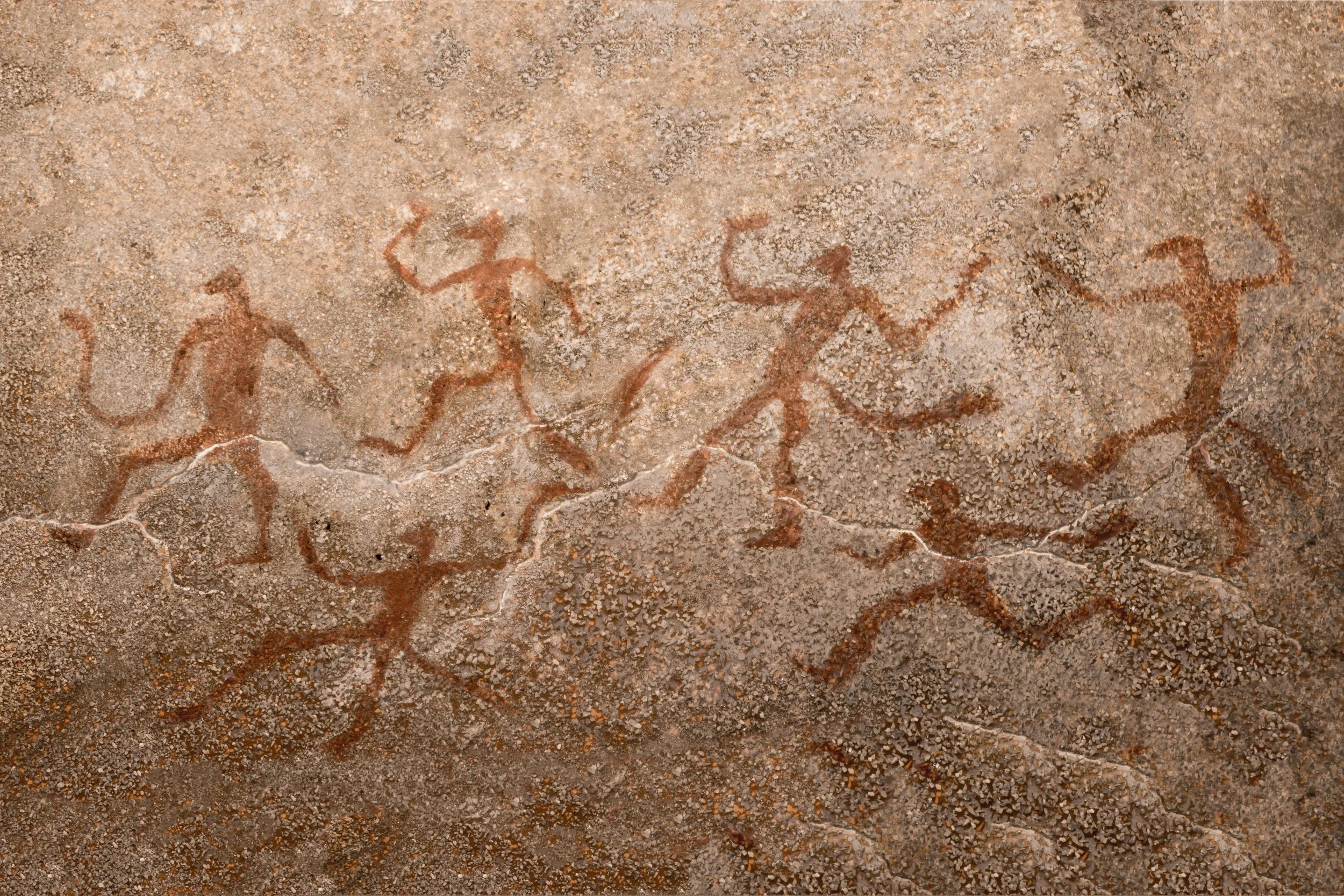
It’s easy to lose perspective in modern life because this is all we know, but in order to get to here, there was a long slow evolution over thousands of generations and millions of years. When you can visualize how we fit into this evolution it is easy to see that we are living in a bizarre evolutionarily mismatched time and why our mental health and physical health are often maladapted to it.
To clarify, I’m not advocating a return to “paleo” or hunter gatherer ways, just using this awareness as a way to cut ourselves some slack and have a more balanced perspective on our current culture.
Also in this lesson there is a tie-in to what I believe is another important evolutionary survival tactic, the instinct to make music, art, dance, and storytelling and how it might all be related.
My Mission to Groove brings together several studies that back up our need to be physically active every day, not just for our physical health but our mental health too. Music connects a lot of the physical and mental dots and it has been there helping us since before ancient recorded history (evidence of instruments goes back at least 50,000 years but vocal and percussive synchronization using stepping, clapping, stomping and dancing likely goes back long before that.) Swedish physician and researcher Matz Larsson, MD, Ph.D., has published studies about the connections between bipedal stepping and the origins of music.
The “Born to Run” Reading list
1. Born To Run and other books by Christopher McDougall
Christopher McDougall’s books are a gateway into thinking about running, movement, and life differently. Many budding runners have been inspired by reading Born to Run. It’s a travel adventure, running history book, and paleoanthropological evolutionary theory made manifest. The sequel Born to Run 2 is more of a practical training guide and it even mentions Lady Southpaw in Chapter 11.2 “Running with Music.” Also worth mentioning is co-author, the “Born to Run Coach,” Eric Orton. His other book The Cool Impossible is also worth a read if you’re interested in becoming a better runner and healthier human.
2. Joy of Movement by Kelly McGonigal
This book feels like a calling. It really dives deep to explain the science behind why running and music are encoded into our bodies and brains, especially from a mental health perspective. It is so important that we continue to nurture movement throughout our lives and this book is full of examples of how people made their lives better by finding joy in movement. It uses neuroscience to show how movement can actually mend the reward network and improve mental health exponentially from depression to addiction. It talks about the “runner’s high” and it turned me onto the term groove as a scientific subject of study.
Daniel Levitin is a musician and music producer turned neuroscientist and his books are very enlightening for understanding how music touches our brains in ways that nothing else does. He was first known for the books This is Your Brain on Music and The World in Six Songs, which are great. However, his latest work I Heard There Was Sacred Chord; Music as Medicine, really drives home all the interesting connections between music, the brain, the body, its important role in our lives, and the potential to use it mindfully in so many ways. His work is where I first heard the ideas that musicality may have pre-dated language and that bipedal movement is likely the evolutionary basis for rhythm.
The paleoanthropologist cited in Born to Run is an established author in his own right. Two books I really enjoyed are The Story of The Human Body and Exercised. They are foundational in understanding how evolution affects our current biology, why that matters, and why our bodies are maladapted to many aspects of modern life.
5. Do Hard Things by Steve Magness
Steve Magness is a titan in the running/coaching worlds and I imagine all of his books are great, but I’ve only read Do Hard Things. The main reason I want to include it is because it was a big inspiration when I wrote the song “I Am Here Now.” The perspective on resilience and strength is hopefully empowering to anyone enduring hard times (and we all face those throughout our lives.)
Also along those lines is Good Stress by Jeff Krasno. This book offers a good summary about why exercise (among other stressors) is good for longevity, resilience, and working against the chronic ailments of modern society or as he calls them, the FUCKS: Four Ubiquitous Contemporary Killers.
7. Atomic Habits by James Clear
This book is relevant for the idea of how important small things are and casting votes everyday for the life you want to live and the person you want to be. It makes change feel possible, one small habit at a time.